NJ (908) 688-5577
NY (212) 737-2528

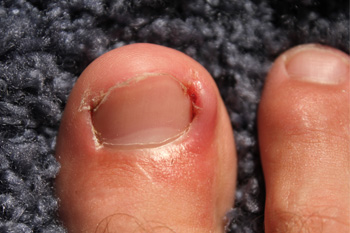 Ingrown toenails occur when the toenail pierces the skin at the fold of the nail. Some common causes of ingrown toenails may include trauma, improper toenail cutting, shoes that are too tight, sweaty feet, and medications. Ingrown toenails can also be recognized by the swelling and inflammation around the toenail that is painful when pressure is applied. While there are many home remedies that can help reduce the pain of an ingrown toenail, it is important to visit a podiatrist in order to prevent an infection or further damage from occurring. Your podiatrist can provide a variety of home remedies, as well as provide surgical options if necessary.
Ingrown toenails can become painful if they are not treated properly. For more information about ingrown toenails, contact Glenn Davison, DPM of Advanced Podiatry. Our doctor can provide the care you need to keep you pain-free and on your feet.
Ingrown Toenails
Ingrown toenails occur when a toenail grows sideways into the bed of the nail, causing pain, swelling, and possibly infection.
Causes
Prevention
Wearing proper fitting shoes and using proper cutting techniques will also help decrease your risk of developing ingrown toenails.
Treatment
Ingrown toenails are a very treatable foot condition. In minor cases, soaking the affected area in salt or antibacterial soaps will not only help with the ingrown nail itself, but also help prevent any infections from occurring. In more severe cases, surgery is an option. In either case, speaking to your podiatrist about this condition will help you get a better understanding of specific treatment options that are right for you.
If you have any questions, please feel free to contact our offices located in Union, NJ and New York . We offer the newest diagnostic and treatment technologies for all your foot care needs.

Feet naturally flatten out and widen with age, and fat pads, which had previously cushioned bones and joints, become worn down. This can cause foot pain, discomfort, and impaired mobility. Simple daily foot care can help older adults maintain foot and ankle health and prevent smaller issues from becoming serious ones. Shoes should be properly sized and offer arch and heel support. Feet should be kept clean to avoid infections and moisturized to avoid sores and cracked heels. Toenails should be trimmed straight across at the proper length to prevent ingrown toenails. Ankles should be elevated regularly to give heels a break from touching the floor or bed, which can lead to sores. If any type of foot sore develops, especially a diabetic ulcer, or there is any kind of foot or ankle pain, it is suggested that you seek the care of a podiatrist.
If you need your feet checked, contact Glenn Davison, DPM of Advanced Podiatry. Our doctor will attend to all of your foot and ankle needs and provide you with quality treatment.
Geriatrics and Podiatry
When people age, some common issues that may occur are bone density loss, dry skin, poor circulation, and rough brittle nails. These issues may also affect your foot health if the necessary steps are not taken to alleviate the problems.
It is important to take care of your feet because feet that are injured or diseased can affect your overall health. Having painful feet hinders your ability to do daily activities or may decrease your willingness to do the things that you need to do.
Visiting Your Geriatrician
As we age, health problems become more likely, so it is essential to visit your doctor for check-ups to ensure that you are doing the best you can to take care of your health. It is recommended to check your feet frequently for any possible cuts, bruises, swelling, corns or any other irregularities.
Taking Care of Elderly Feet
Cracked or dry feet can be treated by applying moisturizer often. It is also important not to wear old socks because the older the sock is, the higher the possibility there will be that there is bacteria there. Wear fresh socks and make sure they fit properly.
Proper foot health means that you can have a more active lifestyle and you will not be bogged down by pain. Foot health also leads to good circulation, which is paramount for overall health.
If you have any questions, please feel free to contact our offices located in Union, NJ and New York . We offer the newest diagnostic and treatment technologies for all your foot care needs.

Toe pain is a common issue that can interfere with walking and daily activities. A stubbed toe occurs when the toe is forcefully hit against a hard surface, leading to bruising, swelling, or even fractures. The pain may be sharp at first and linger as the toe becomes inflamed. While most cases improve with rest, some injuries can be more severe and require medical attention. A podiatrist can determine if the toe is fractured, provide proper treatment, and help prevent long-term complications. If you have ongoing toe pain after stubbing your toe, it is suggested that you schedule an appointment with a podiatrist who can provide effective relief tips.
Toe pain can disrupt your daily activities. If you have any concerns, contact Glenn Davison, DPM of Advanced Podiatry. Our doctor can provide the care you need to keep you pain-free and on your feet.
What Causes Toe Pain?
Most severe toe pain is caused due to a sports injury, trauma from dropping something heavy on the toe, or bumping into something rigid. Other problems can develop over time for various reasons.
Toe pain can be caused by one or more ailments. The most common include:
When to See a Podiatrist
Diagnosis
In many cases the cause of toe pain is obvious, but in others, a podiatrist may want to use more advanced methods to determine the problem. These can range from simple visual inspections and sensation tests to X-rays and MRI scans. Prior medical history, family medical history, and any recent physical traumatic events will all be taken into consideration for a proper diagnosis.
Treatment
Treatments for toe pain and injuries vary and may include shoe inserts, padding, taping, medicines, injections, and in some cases, surgery. If you believe that you have broken a toe, please see a podiatrist as soon as possible.
If you have any questions please contact our offices located in Union, NJ and New York . We offer the newest diagnostic and treatment technologies for all your foot and ankle needs.

Plantar warts are small growths that develop on parts of the feet that bear weight. They're typically found on the bottom of the foot. Don't live with plantar warts, and call us today!

Living with diabetes requires careful attention to the health of the feet and ankles. Small cuts or blisters can progress into more serious wounds because circulation may be reduced and sensation often diminished. One type of wound seen in diabetic patients is a neuropathic ulcer, which develops when pressure and friction go unnoticed due to nerve damage. Ischemic ulcers may also appear when poor blood flow prevents proper healing. Infections are another concern, beginning as minor sores and quickly advancing without timely care. Even something as simple as a shoe rubbing against the skin can create an opening that lingers. Recognizing changes early is essential, yet many patients overlook small issues until they worsen. Professional evaluation offers the best chance for recovery. If you notice any wounds on your feet or ankles it is suggested that you promptly consult a podiatrist who can effectively treat foot wounds.
Wound care is an important part in dealing with diabetes. If you have diabetes and a foot wound or would like more information about wound care for diabetics, consult with Glenn Davison, DPM from Advanced Podiatry. Our doctor will assess your condition and provide you with quality foot and ankle treatment.
What Is Wound Care?
Wound care is the practice of taking proper care of a wound. This can range from the smallest to the largest of wounds. While everyone can benefit from proper wound care, it is much more important for diabetics. Diabetics often suffer from poor blood circulation which causes wounds to heal much slower than they would in a non-diabetic.
What Is the Importance of Wound Care?
While it may not seem apparent with small ulcers on the foot, for diabetics, any size ulcer can become infected. Diabetics often also suffer from neuropathy, or nerve loss. This means they might not even feel when they have an ulcer on their foot. If the wound becomes severely infected, amputation may be necessary. Therefore, it is of the upmost importance to properly care for any and all foot wounds.
How to Care for Wounds
The best way to care for foot wounds is to prevent them. For diabetics, this means daily inspections of the feet for any signs of abnormalities or ulcers. It is also recommended to see a podiatrist several times a year for a foot inspection. If you do have an ulcer, run the wound under water to clear dirt from the wound; then apply antibiotic ointment to the wound and cover with a bandage. Bandages should be changed daily and keeping pressure off the wound is smart. It is advised to see a podiatrist, who can keep an eye on it.
If you have any questions please contact our offices located in Union, NJ and New York . We offer the newest diagnostic and treatment technologies for all your foot and ankle needs.

Heel fissures, often called cracked heels, occur when the skin surrounding the heel becomes dry, thickened, and splits open. They are not only uncomfortable but can also become painful and prone to infection, if left untreated. People who stand for long hours of time, wear open-backed shoes, or live in dry climates are more likely to develop them. Seniors, individuals with diabetes, and those with skin conditions such as eczema or psoriasis, are also at greater risk. Treatment begins with softening the skin through regular moisturizing and gentle exfoliation. Thick emollients or heel balms can help seal in moisture and protect the skin. Wearing supportive shoes with a closed back reduces pressure and prevents further cracking. If you have severe heel fissures, it is suggested that you see a podiatrist who may remove thickened skin or provide specialized treatments before complications develop.
Cracked heels are unsightly and can cause further damage to your shoes and feet. If you have any concerns, contact Glenn Davison, DPM from Advanced Podiatry. Our doctor can provide the care you need to keep you pain-free and on your feet.
Cracked Heels
Cracked heels appear unappealing and can make it harder for you walk around in sandals. Aside from looking unpleasant, cracked heels can also tear stockings, socks, and wear out your shoes. There are several methods to help restore a cracked heel and prevent further damage.
How Do You Get Them?
Dry skin is the number one culprit in creating cracked heels. Many athletes, walkers, joggers, and even swimmers suffer from cracked heels. Age and skin oil production play a role to getting cracked heels as well.
Promote Healing
Over the counter medicines can help, especially for those that need instant relief or who suffer from chronic dry feet.
Wear Socks – Wearing socks with medicated creams helps lock in moisture.
Moisturizers – Applying both day and night will help alleviate dryness which causes cracking.
Pumice Stones – These exfoliate and remove dead skin, which allows for smoother moisturizer application and better absorption into the skin.
Change in Diet
Eating healthy with a well-balanced diet will give the skin a fresh and radiant look. Your body responds to the kinds of food you ingest. Omega-3 fatty acids and zinc supplements can also revitalize skin tissue.
Most importantly, seek professional help if unsure how to proceed in treating cracked heels. A podiatrist will help you with any questions or information needed.
If you have any questions, please feel free to contact our offices located in Union, NJ and New York . We offer the newest diagnostic and treatment technologies for all your foot care needs.

 Advanced Podiatry - Default